The Pure AI Blog Short Dispatches from AI's Front Lines
The Pure AI Blog is researched, fact-checked, edited and updated by the editors of PureAI.com, with writing assistance from AI. To submit your company's press release for consideration, contact [email protected].
NVIDIA reported revenue of $57.0 billion for its third quarter ended October 26, 2025—up 62 percent year-over-year and 22 percent sequentially. Non-GAAP earnings per share reached $1.30, while gross margins were 73.6 percent. The company’s data-center business posted a record $51.2 billion in revenue, up 66 percent year-over-year and 25 percent from the prior quarter, driven by demand for the Blackwell platform and accelerated compute across training and inference. NVIDIA also returned $37.0 billion to shareholders during the first nine months of FY26, with $62.2 billion remaining under its buy-back authorization.
Beyond financials, the results reflect strategic trends shaping enterprise IT and developer ecosystems: rising enterprise investment in AI infrastructure, growing footprint of hyperscale data centers, and a shift toward purpose-built hardware for cloud and edge workloads. Included in the earnings report were the many strategic partnerships throughout the year, including a partnership with OpenAI for 10 gigawatts of NVIDIA systems for next-gen AI infrastructure, among others. The full earnings report can be viewed here.
Posted by Pure AI Editors on 11/24/20250 comments
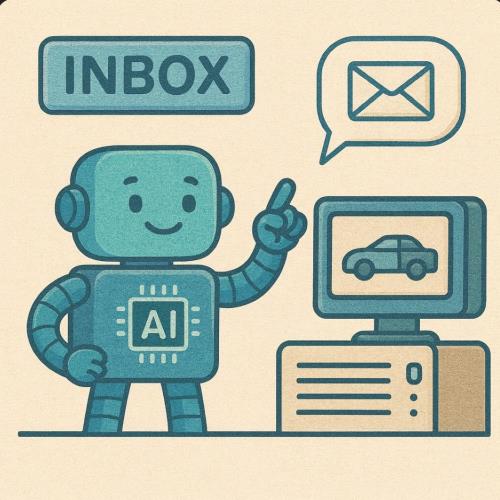
Numa, a leading AI platform for automotive dealerships, has introduced a voice AI platform with a “Smart Inbox” designed to help auto dealerships manage incoming customer conversations. The tool is able to see a full customer history to understand the point of the call, coordinate the next steps with the rest of the team, alert humans when intervention is needed and empowers the entire team through the mobile. This offers faster replies, eliminates delayed callbacks and reduces overall workload across service advisors. Numa says the tool is aimed at reducing missed opportunities, particularly during peak call volumes when dealerships struggle to respond quickly enough to potential buyers or service customers.
Dealerships are increasingly adopting AI systems to mitigate staffing shortages and rising customer expectations for rapid response. Numa’s unified inbox approach emphasizes cross-channel visibility rather than standalone call routing. For dealerships looking to modernize customer engagement without overhauling their DMS or CRM systems, Numa’s platform provides a consolidated front end that reduces lead leakage and streamlines follow-up.
Posted by Pure AI Editors on 11/24/20250 comments
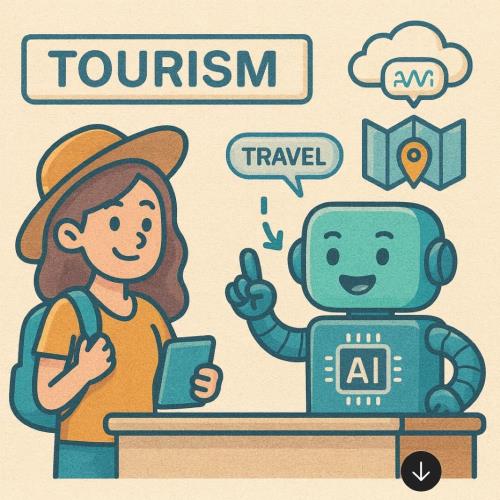
Visit Rye and GuideGeek, a custom conversational AI specialist for travel, have launched a new AI-powered visitor tool that offers an interactive way to explore the town’s connection to the creator of Captain Pugwash, John Ryan. The tool provides historical context, walking directions and storytelling prompts that help tourists navigate notable locations tied to the character’s origins. Organizers say the goal is to modernize the visitor experience while preserving the local heritage that continues to attract fans of the long-running British children’s series.
The project comes as tourism boards increasingly adopt AI assistants to personalize travel planning and on-site discovery. It's simple to use features through a simple QR scan, which allows visitors to 'chat' with Pugwash himself on WhatsApp. Restaurant recommendations, trip itineraries and any information regarding Rye needed can all be easily provided. The tool aims to position Rye as a technologically advanced town and is being scaled for future potential benefits.
Posted by Pure AI Editors on 11/24/20250 comments
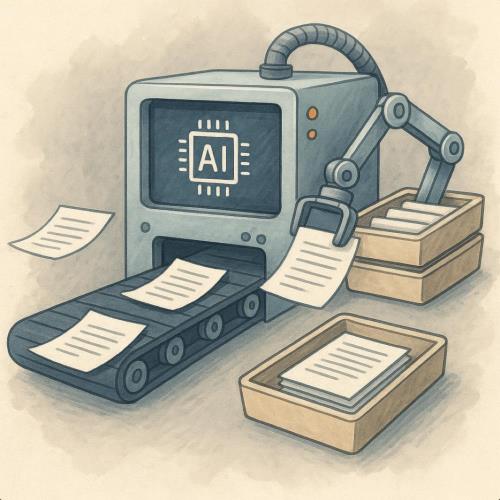
Hyland, a unified content and intelligence solutions provider, has announced a set of cloud and AI enhancements with the Content Innovation Cloud platform, designed to streamline content processing and support emerging agentic automation patterns.
The updates include AI-assisted document ingestion, template-free classification, knowledge extraction and new workflow orchestration features intended to help organizations automate complex, content-heavy processes in areas such as claims, onboarding and case management. Hyland says these updates continue to meet customers' needs and harness the potential of their content.
The launch comes as organizations increase investment in AI-enabled content lifecycle tools to offset manual processing costs. Hyland's product innovations include Hyland for Salesforce, Guidewire ClaimCenter, SAP SuccessFactors Employee Central and Workday. Additional enhancements include breakthroughs in content intelligence, automation advancements, and content management momentum. Hyland’s emphasis on agentic orchestration aligns with broader enterprise trends, where teams want autonomous systems that can take action—not just summarize content.
Posted by Pure AI Editors on 11/24/20250 comments
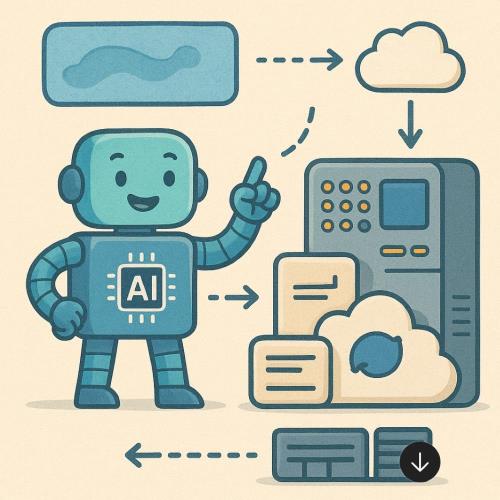
Kyndryl, an enterprise technology provider, has introduced a new agentic AI framework and services to enable autonomous operations across mainframe environments, including IBM z/OS systems and hybrid workloads. The offering combines the existing Kyndryl Agentic AI Framework for seamless workflows and agent use. Features include smarter decision making, improved reliability, access to AI covering skills gaps and quicker responses to emerging threats in a modernized IT environment.
The launch reflects growing interest in modernizing mainframes without disruptive migration. Kyndryl’s agentic approach seeks to unify operational automation with application transformation guidance. Merged with Kyndryl Bridge, new services include Kyndryl AI Assistant for Z, which addresses customer challenges and improves retention. For enterprises balancing mission-critical stability with modernization demands, the framework adds a structured way to introduce AI-driven reliability and optimization into long-standing mainframe estates.
Posted by Pure AI Editors on 11/24/20250 comments
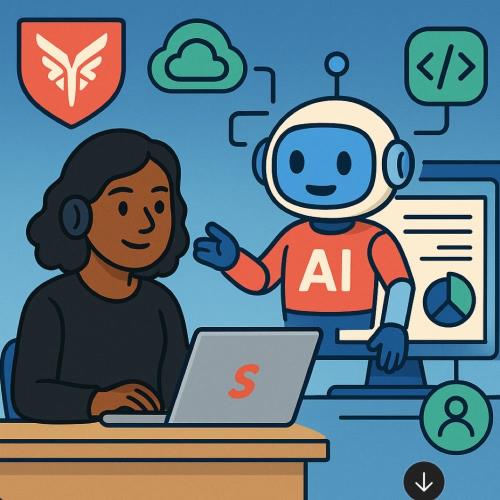
Synack, a leader in AI-powered penetration testing, has introduced Sara Pentest, an agentic AI pentesting solution designed to augment its existing human-led security testing platform. The system uses autonomous AI agents to map attack surfaces, probe for misconfigurations, and generate exploit paths across cloud, application and identity environments. Synack says the tool can perform continuous testing with faster coverage than traditional manual assessments, while human researchers validate high-impact findings to ensure accuracy and reduce noise. The feature integrates with Synack’s analytics dashboard, enabling security teams to prioritize risks with real-time context.
The launch comes as organizations look to automation to counter expanding attack surfaces and talent shortages in offensive security. Synack’s hybrid model—combining autonomous agents with its vetted researcher network—positions it to serve regulated industries that require both speed and validated results. This platform provides enterprises with the flexibility to align tests with business risk in an optimal and efficient way.
Posted by Pure AI Editors on 11/17/20250 comments
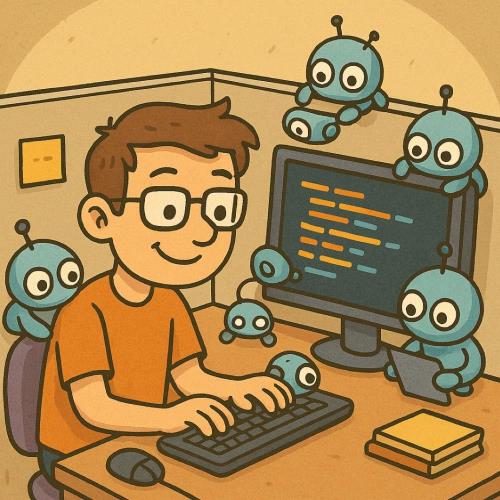
AlertD, a multi-purpose platform, has introduced its agentic AI platform designed to support Site Reliability Engineering (SRE) and DevOps teams managing complex cloud environments.
The system uses autonomous agents to triage alerts, analyze logs and metrics, execute remediation tasks, and provision or modify cloud resources in real time. Alertd says it integrates with major observability and infrastructure tools, enabling end-to-end automation of common operations such as scaling, correcting configuration drift and responding to incidents. It is a comprehensive and extensible platform designed for a full spectrum of cloud operations that integrates seamlessly into the AWS ecosystem.
The launch reflects a broader industry shift toward AI-augmented operations. Alertd’s multi-agent approach aims to unify observability, orchestration and remediation in a single workflow. The model aligns with emerging practices in AIOps and platform engineering, where developers and ops teams increasingly rely on autonomous systems to maintain reliability at scale.
Posted by Pure AI Editors on 11/17/20250 comments
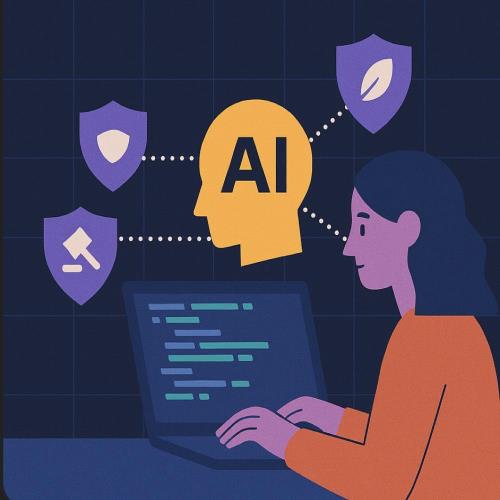
Interact Marketing, a marketing agency specializing in AI-driven SEO analytics, has introduced a new Google AI-Mode Marketing Program designed to help brands maintain visibility as Google expands its AI-driven search experiences. The program focuses on strengthening structured data, clarifying page-level entities, improving conversion pathways and aligning content with Google’s emerging AI summarization and answer-generation models. The program ensures improved rankings, enhanced citations and increased conversions.
The launch follows growing concern among SEO and digital teams about volatility tied to Google’s AI Overviews and experimentation with “Search Generative Experience”-style outputs. Interact’s emphasis on entity reinforcement and conversion analytics reflects a shift from keyword-centric tactics toward semantic, performance-based SEO suited to AI-first search environments.
Posted by Pure AI Editors on 11/17/20250 comments
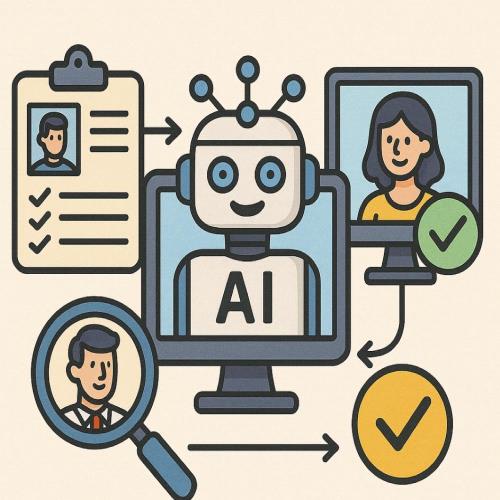
Eximius, an AI-powered recruitment platform, has launched an AI-powered hiring platform designed to help organizations accelerate candidate screening while improving the consistency of hiring decisions. The system can process multiple applications instantly and generate candidate ranking based on skill, education and experience. Eximius also offers a chat- and voice-based AI screening option for interviews.
The launch arrives as enterprises increasingly adopt AI to manage talent shortages and rising applicant volumes. Eximius emphasizes precision scoring and workflow integration tailored to enterprise HR tech stacks. The platform’s focus on explainability and auditability reflects growing pressure from regulators and corporate counsel as AI hiring tools come under greater scrutiny. The platform aims to offer more features by Q1 of 2026 towards a full "hire-to-retire" ecosystem.
Posted by Pure AI Editors on 11/17/20250 comments
BrowserStack, a leading software testing platform, has introduced an AI-powered Self-Healing Agent designed to identify and remediate broken locators during test phases. The tool analyzes code changes, identifies failing selectors and autonomously repairs them without developer intervention. BrowserStack says this eliminates friction by keeping builds green and teams productive. The agent supports major automation tools, including Selenium, Playwright and Appium.
The release comes as enterprises struggle to maintain test stability in increasingly distributed development environments. BrowserStack’s self-repair model pushes automation earlier into the pipeline by eliminating the need for manual selector updates. The Self-Healing Agent assists teams by reducing automation build fails by 40 percent with transparent logs that give teams the insight and visibility needed from test runs.
Posted by Pure AI Editors on 11/17/20250 comments