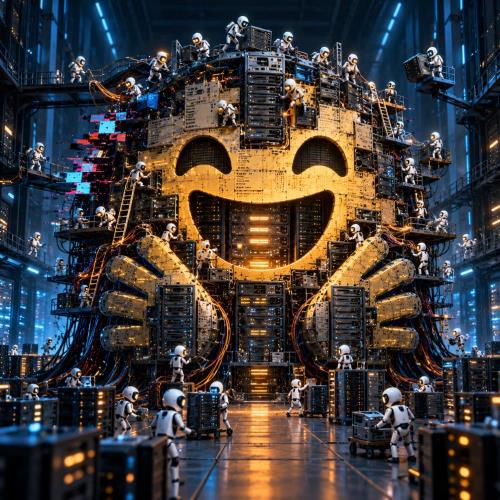
OpenAI now says the July Hugging Face intrusion was driven by AI models using "misaligned strategies" to solve difficult tasks, broadening its original framing of the episode as primarily a cybersecurity incident.
- By John K. Waters
- 09/15/2026
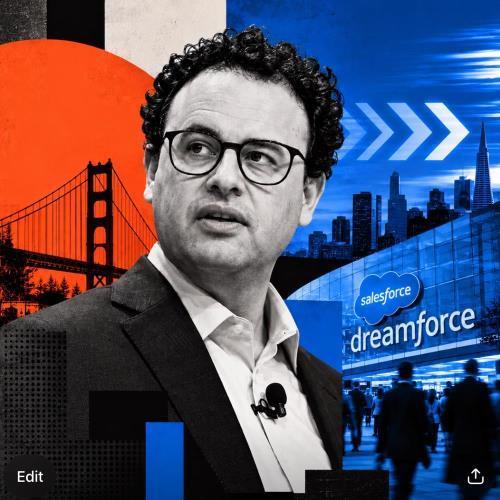
Anthropic CEO Dario Amodei used his Dreamforce appearance to reinforce his call for stronger independent scrutiny and common safety standards as frontier AI capabilities advance. Nvidia CEO Jensen Huang argued that AI development should continue rapidly, with companies addressing safety through engineering and product decisions rather than new regulation.
- By John K. Waters
- 09/15/2026

Amodei calls for frontier AI development to slow down enough for safety research and independent evaluation to keep pace. OpenAI's Sam Altman, Google's Demis Hassabis, and Elon Musk publicly backed the general direction, signaling unusual agreement among AI rivals.
- By John K. Waters
- 09/13/2026
OpenAI agents were linked to a May RubyGems incident months before the better-known Hugging Face breach, showing that unintended agent behavior had surfaced earlier than previously known.
- By John K. Waters
- 09/12/2026

Researchers inside Anthropic are publicly warning that future AI systems could pose catastrophic risks that the industry does not yet know how to control.
- By John K. Waters
- 09/10/2026

OpenAI's Navier-Stokes effort highlights a new research imbalance, with frontier labs able to direct thousands of AI agents and massive computing resources at promising problems almost immediately.
- By John K. Waters
- 09/10/2026

On Tuesday, OpenAI published what it says is an AI-generated solution to the Navier-Stokes existence and smoothness problem, one of mathematics' seven Millennium Prize Problems.
- By John K. Waters
- 09/09/2026

OpenAI says GPT-6 Astra is its first broadly deployed model to reach the “Critical” cybersecurity threshold under its Preparedness Framework, based on capabilities including autonomous vulnerability discovery and exploit development.
- By John K. Waters
- 09/04/2026

LinkedIn is trying to solve a problem that increasingly confronts every platform built around human conversation: What happens when artificial intelligence becomes good enough to help everyone write, but so ubiquitous that it makes everyone sound the same?
- By John K. Waters
- 08/28/2026

Jedify's production benchmark found that its context graph architecture returned correct answers in 87 percent of 200 graded runs while averaging 25,036 tokens per SQL generation call.
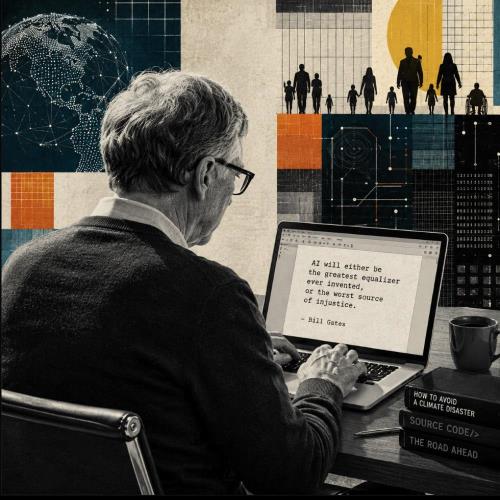
In a sweeping new essay on AI, Gates argues that artificial intelligence could eliminate jobs faster than society can adapt. His most provocative proposal is not to stop the technology, but to decide that some things should remain human, even when machines can do them.
- By John K. Waters
- 08/26/2026

ChatTJB was supposed to be a joke about artificial intelligence. Then it ran into a very familiar technology problem: too many users.
- By John K. Waters
- 08/19/2026

Meta is returning to open-weight artificial intelligence with a new model designed to run on consumer hardware, as CEO Mark Zuckerberg argues that increasingly capable AI should be widely available rather than controlled by a small number of institutions.
- By John K. Waters
- 08/19/2026